About the sculptor
Maxim Dorzhiev
Sculptor and jeweller. He makes small statues devoted to Buryat culture: scenes of nomadic life, rituals, heroes of the epics and the sacred animals of the steppe. He works in bronze, silver and gold, and also makes jewellery.
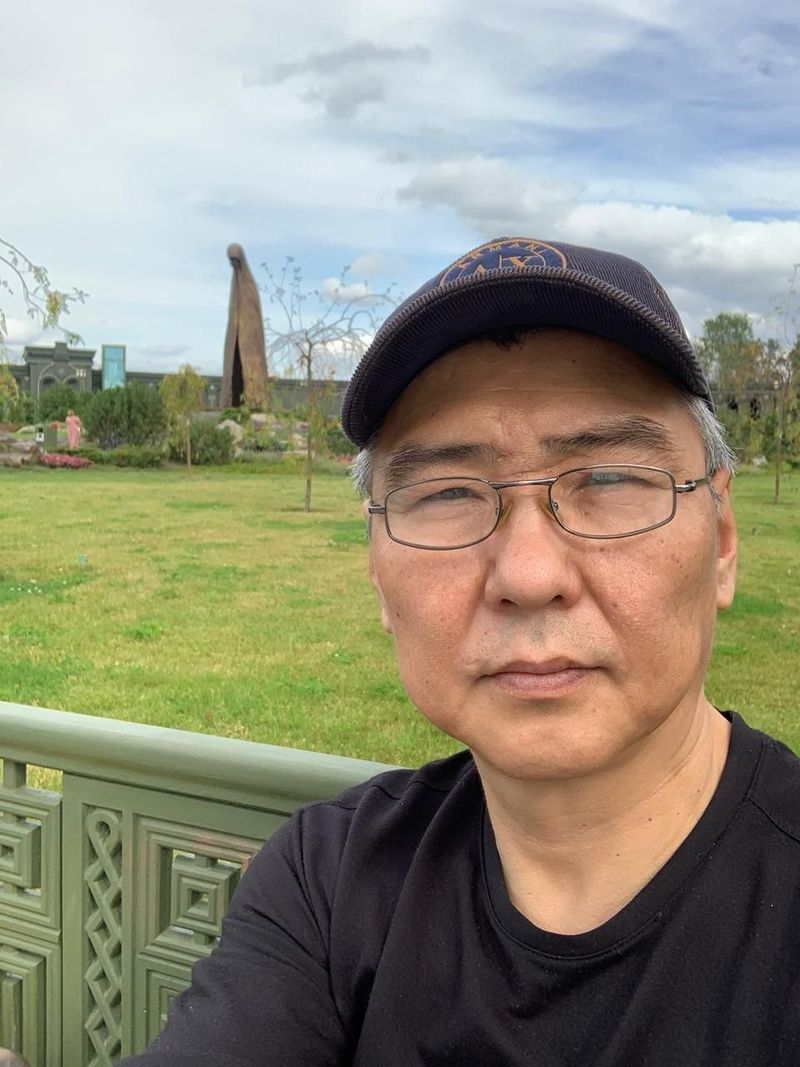
Metal remembers longer than stone or wood. I want a small bronze figure to hold the steppe, the road and the voices of the ancestors, so that you want to hold it in your hand.
— Maxim Dorzhiev
The art of patina
Patina is the colour and the skin of bronze. Maxim patinates his works himself, by the hot method: the metal is heated and solutions are applied layer by layer until the right shade, depth and play of light appear. It takes years to learn: the result depends on the temperature, the alloy and the hand of the master, so no two patinas are alike, and every figure gets a colour of its own.
Every patina is unique: the colour in a photograph may differ slightly from the living metal.
The Buryat tradition
The Buryat darkhan is a master of metal, a craftsman once respected almost like a shaman. Maxim’s work carries the signs of the Buryat tradition: the alkhan khee meander and the ulzy knot of happiness, the steppe horse, the khadak and the serge hitching post.
How a sculpture is made
Lost-wax casting, a technique more than two thousand years old.
- 01
Idea
Sketches and the search for an image: a legend, a ritual, the character of a hero.
- 02
Wax model
The figure is modelled in wax, every fold and detail at full size.
- 03
Casting
The model is invested in a mould, the wax is burnt out and metal is poured in its place.
- 04
Chasing and patina
The surface is refined with chisel and chasing tools, then hot-patinated: the colour of the bronze is built up by hand, layer by layer.
- 05
Finished work
The artist’s signature, a stone or wooden base, gift packaging.